Reviewed · TOURS
Funchal Agriculture Green Tour
This Madeira day feels interesting because it follows working agriculture step by step, from banana plots to milk and rum. You see how the island grows, processes, and sells food, not just postcard views. It’s the kind of tour that makes you look at everyday things in a new way, with Madeira farming at the center.
I especially like two parts. First, the private banana field and the government-run banana business tour give you a real look at how bananas go from field work to packing. Second, the lunch is genuinely local and filling, with home-style bread, tapas, and a choice of fish or meat, plus drinks and coffee.
One thing to consider: banana tasting depends on the season, and in winter you may not get fully ripe fruit. It’s still educational, but if you’re hoping for sweet, ready-to-eat bananas, timing matters.
Key highlights you’ll care about
- Private banana field visits show how farmers manage their land up close, in small groups
- Agriculture School greenhouse lessons focus on grafting methods, plus international and local tree varieties
- Family-run cattle farm with old milking techniques connects directly to requeijão cheese milk production
- Porto da Cruz rum factory and steam machines (often operating during April to May sugarcane season)
- Home-style lunch with drinks and coffee in a countryside setting outside the main tourist lanes
From Funchal hotel pickups to Sao Martinho farm talk
The day starts with hotel pickup around Funchal and Caniço, and you’ll be in a small group of up to 8. Expect a short guided introduction in the Sao Martinho area (about 40 minutes). It’s a practical warm-up, where the guide sets the tone and helps you understand what you’re about to see, so the rest of the stops click faster.
Then you head out through countryside roads. Part of the appeal is that you leave the urban rhythm of Funchal and move into working territory. You’ll be walking on uneven ground at some points, so comfortable shoes matter more than you might think. If you’re used to sightseeing only, this tour asks you to pay attention to how people actually work the land.
The pacing feels steady rather than rushed. You’ll get a guided explanation at multiple points, and you’re not just getting driven past things. It’s also worth knowing that the vehicle and pickup timing can shift a bit due to traffic or road work. Build in a little buffer on your day plan.
Other Funchal days worth keeping in a tab:
- Porto Moniz, Seixal, Fanal Forest, Cliff Skywalk in Open Roof 4X4
★ 5.0 · 3,631 reviews - Funchal: Pico do Arieiro Sunrise Transfer Self-guided Hike
★ 4.9 · 2,798 reviews - Madeira Funchal:East Tour Pico Arieiro & Santana&Laurissilva
★ 4.9 · 1,994 reviews
Private banana field access and how the workers manage the plot
The star of the early morning is a private banana field in the Funchal area. This is not a generic roadside stop. You get time to see the banana business up close, including how farmers look after their land and what their day-to-day decisions look like.
What I like about this stop is that it turns bananas from a product into a process. You start thinking about selection, care, timing, and the practical reality of managing crops on Madeira’s terrain. The guide helps connect what you see in the field to what comes next.
A note on expectations: the tour includes banana tasting later, but fruit ripeness can vary. The tour information specifically warns that in winter you don’t always have ripe bananas. If you’re traveling in cooler months, go in ready to learn first, and treat tasting as a bonus when conditions allow.
Also, this is a working area. You’ll want to move carefully, keep your balance, and avoid assuming the ground is smooth just because it looks green from a bus window.
The government banana business tour at GESBA, from selection to packing
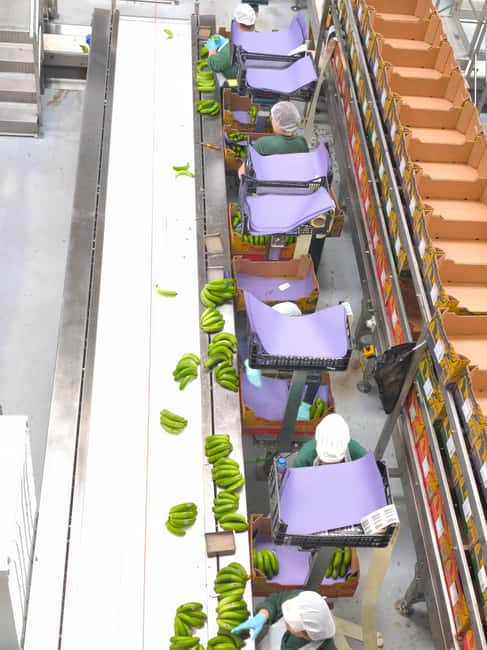
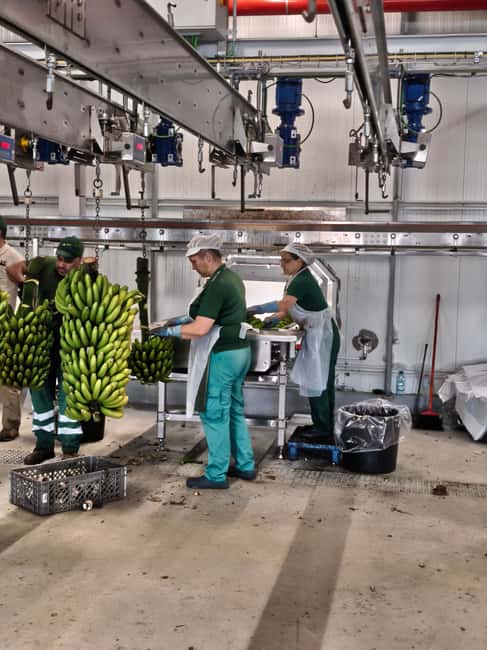
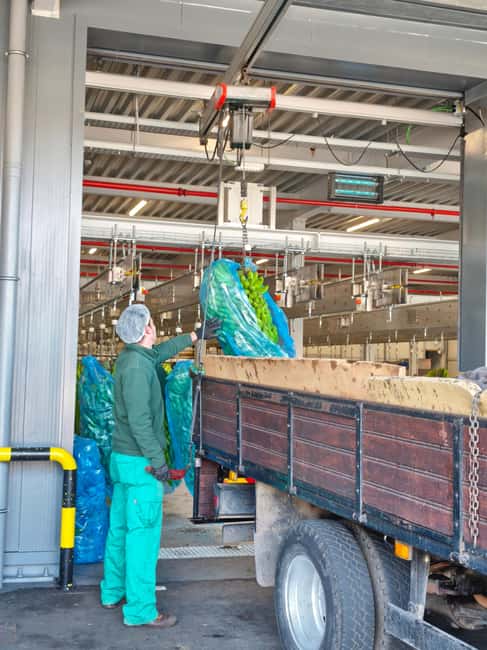
After the private field, you visit the GESBA (Empresa de Gestão do Sector da Banana), the government-run side of the banana business. This part is guided for about 45 minutes and focuses on what happens once bananas are picked.
This is where the tour becomes more than farming talk. You learn what’s done with bananas after harvest, and how the workflow moves through selection and then into packing. It’s the behind-the-scenes connection between the farm and the supply chain, and it helps you understand why bananas do not just appear in shops.
If you care about how food systems work, this stop is a good payoff. Even if you don’t remember every detail, you’ll walk away with a clearer picture of how the island organizes the banana trade.
And yes, you’ll often get a banana tasting at the end. In winter, the guide may offer what’s available rather than perfectly ripe fruit. Either way, the tasting works as a reality check for what the island can produce at that time of year.
Agriculture School greenhouse time, grafting methods, and fruit varieties
Next comes one of the most hands-on learning stops: the Agriculture School. You’ll get a tour of the school grounds, including a greenhouse setting where grafting methods are part of the lesson.
Grafting is the kind of topic that sounds technical until someone explains it clearly. Here, you learn how farmers use grafting methods on the island, and you get context for why it matters in an environment where growing conditions can be challenging. The goal is practical, not academic.
You’ll also see trees planted over the years, including international varieties as well as local fruit trees like avocados and lemon trees. When fruit is in season, tasting may be offered. Even if you don’t get every flavor, you’ll understand the idea: this isn’t just a school display, it’s a living teaching site tied to what people actually grow.
One practical tip: wear warm layers if you’re sensitive to cool greenhouse air. The tour suggests warm clothing and a jacket, and that advice usually makes sense in Madeira where weather can shift.
Same island, a completely different day out:
- Madeira Dolphin and Whale Watching on a Ecological Catamaran
★ 4.5 · 1,957 reviews - VipDolphins Luxury Whale Watching
★ 5.0 · 1,709 reviews - From Funchal: Transfer to Pico do Arieiro & Pico Ruivo Trail
★ 4.9 · 1,591 reviews - Whale and Dolphin Watching Tour in Madeira
★ 5.0 · 1,192 reviews
Caminho do Arieiro 97a and the guided segments you should actually notice
Between the bigger “named” stops, there are guided segments that feel smaller but matter. One example is Caminho do Arieiro 97a, with about an hour of guided time. The tour information doesn’t spell out every detail of what you’ll see there, but you can expect the guide to connect the scenery to farming practices.
This is where you often learn to read the island. You start noticing farming patterns, how properties are worked, and how people shape production around the local environment. These guided stretches also help keep the pace balanced, so the day doesn’t feel like a nonstop bus ride.
Don’t treat these stops as filler. On tours like this, the guide’s explanations are what turn a drive into an education. Keep your questions ready, especially if you enjoy crop talk or you like hearing how people solve real problems with local methods.
Santana lunch: cozy countryside food with real choices
Then you reach Santana, and lunch is served in a cozy countryside rural area. You’ll have about an hour here for regional food, and it’s one of the most comforting parts of the day.
What makes this lunch feel worth it is the home-style structure:
- fresh baked home bread
- tapas with local foods
- a main meal choice, fish or meat
- fresh vegetables
- homemade desserts
Drinks are included with the meal, plus coffee. That matters for value, because it’s not just “a sandwich included” energy. It’s a full meal that fits the theme of local life.
Also, the timing helps you reset. After banana and greenhouse learning, you’ll want a pause. Lunch gives you that, plus the chance to sit and absorb what you’ve learned so far.
If you’re fussy about meals, you’ll still have two main options, fish or meat. That’s usually easier than tours that offer one set plate for everyone.
Porto da Cruz rum factory, sugarcane country, and steam machines
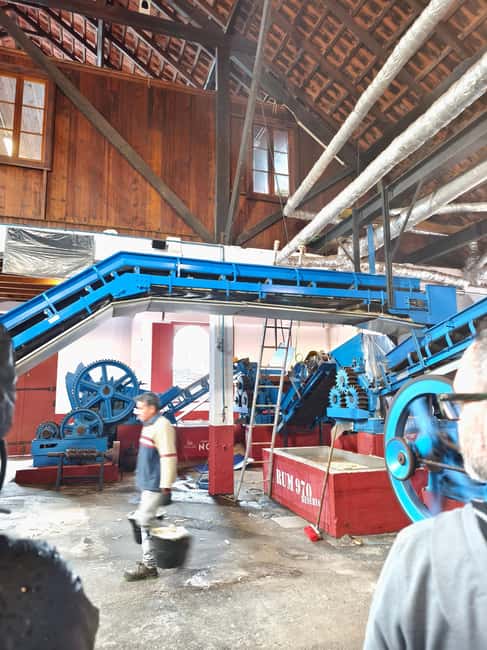
After lunch, you head to Porto da Cruz, in the sugarcane region. The rum factory visit is guided for about 40 minutes and includes a look at very old rum production methods, including steam machines that still operate.
This part can be especially fun. The tour info notes that during sugarcane season in April to May, the steam machines are operating. If your travel dates align with those months, you’re more likely to see the factory in active mode rather than on quiet display.
Either way, it’s a different kind of agriculture story. Sugarcane connects back to the island’s farming life, and rum production shows how raw crops turn into something with history, trade, and local pride behind it.
It also tends to break the day into nice chapters. Farming in Funchal, tree science at the school, animals in the countryside, then a spirits stop at the coast. You don’t get stuck in one theme all day.
Talho do Caniço cattle farm and the milk story behind requeijão
The final working-lifestyle highlight is a private cattle farm in Talho do Caniço. This stop runs about 40 minutes and is described as a family operation with a history on the trade for over a hundred years.
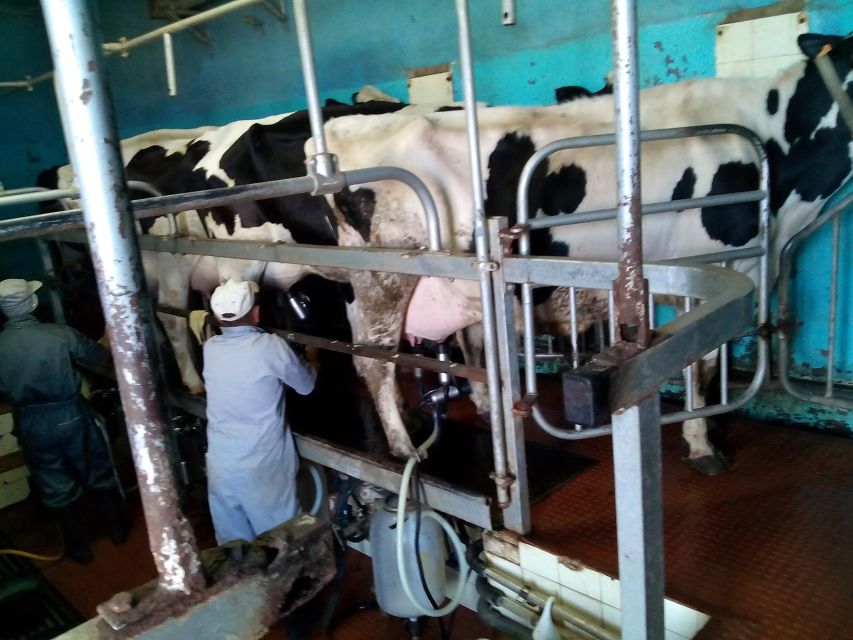
The big connection here is milk production for Madeira’s famous requeijão cheese. The tour information says the farm provides much of the milk used for making requeijão. You’ll also see older milking techniques, which gives you a strong sense of how traditional farming practices worked before modern equipment changed the day-to-day.
I like this stop because it adds balance. Many food tours focus on one crop. Here you see that agriculture is not only fields and fruit, it’s also animals, schedules, and the practical craft of care and production.
Bring your calm curiosity. Farms run on routine, and the experience works best when you treat it like you’re learning how a household operation works, not like you’re watching a show. Comfortable shoes are again important, since farm areas do not always prioritize visitor-friendly surfaces.
Logistics, timing, and who this tour fits best
This tour is built for small-group learning, capped at 8 participants. The guide languages include Spanish, English, French, and German. That multilingual setup matters if you want explanations that stay clear from stop to stop.
Pickup is included for hotels in Caniço and Funchal, with free pickup also mentioned from Santa Cruz and Garajau. If you’re staying in areas farther out like Ponta do Sol, Calheta, Santana, or São Vicente, the tour says you can meet in the main road near the Hotel Madeira Panorâmico parking area (free there).
Expect pickup delays of up to around 15 minutes due to traffic, accidents, or road works. The tour also suggests you wait in the lobby about 10 minutes before the scheduled pickup time, and advises checking email or WhatsApp for exact pickup details. That’s not extra fluff. In Madeira, small timing changes happen and you’ll enjoy the day more if you’re prepared.
What to bring is simple and practical:
- comfortable shoes
- warm clothing, plus a jacket
Not suitable for children under 6, and it’s not set up for wheelchair users. If you want a smooth stroller-friendly day, this probably won’t be your best bet.
Price and value: what $100 buys you in 6 hours
At $100 per person for about 6 hours, this tour isn’t the cheapest option in Madeira. But it also isn’t a “drive and watch” experience. You’re paying for multiple guided stops plus included meals and tastings.
Here’s where the value comes from:
- hotel pickup and drop-off in Funchal and Caniço
- farm and school entrances (banana farm, agriculture school, cow farm)
- a full regional lunch with tapas, dessert, and drinks plus coffee
- rum tasting
So you’re not just buying access to one site. You’re effectively bundling education, transport, entry fees, and a proper meal. For many people, lunch alone is a meaningful chunk of the overall spend, especially because it’s local and includes drinks.
You should also consider seasonality. Banana tasting might be limited in winter if fruit isn’t ripe. Still, the field and GESBA lessons remain valuable even without perfect bananas in hand.
If you like agriculture, food systems, and practical behind-the-scenes stories, the price starts to feel more reasonable. If you’re expecting mainly scenic stops with minimal walking, you might feel the day is more “work-focused” than “view-focused.”
Should you book the Funchal Agriculture Green Tour?
Book it if you want your Madeira day to feel grounded in real work. This tour gives you private farm access, grafting education at an Agriculture School greenhouse, and a cattle stop tied to requeijão cheese. Add in the rum factory with steam machines, and you get a nice mix of crops, animals, and processing.
Skip it or choose a different style of tour if you have limited mobility, you’re traveling with a child under 6, or you hate any chance of timing surprises. Also, if you’re traveling in winter and bananas are your main goal, go in with flexible expectations about ripeness.
If you want a small-group day that teaches you something you can actually use later, you’ll probably like this one.
FAQ
How long is the Funchal Agriculture Green Tour?
The tour lasts about 6 hours.
What does the price include?
You get hotel pickup and drop-off (for Caniço and Funchal), entrances to the banana farm, agriculture school, and cow farm, a local lunch with tapas, dessert, drinks, and coffee, plus rum tasting.
Is hotel pickup included?
Yes. Pickup and drop-off are included for hotels in Caniço and Funchal, and the tour also lists free pickup for Santa Cruz and Garajau.
Where can guests meet if they are not in Funchal or Caniço?
Guests coming from Ponta do Sol, Calheta, Santana, and São Vicente can meet in the main road by the Hotel Madeira Panorâmico parking area, which is free.
What languages are available for the guide?
The live guide speaks Spanish, English, French, and German.
Will there be banana tasting?
Yes, banana tasting is included at the end. In winter, you might not always have ripe bananas.
When are the rum steam machines operating?
The steam machines are operating during sugarcane season from April to May.
What should I bring for the tour?
Bring comfortable shoes and warm clothing, including a jacket.
Is the tour suitable for children and wheelchair users?
It is not suitable for children under 6, and it is not suitable for wheelchair users.
Does the tour run on all holidays?
No. It does not take place on bank holidays, Christmas day, or January 1.
Just added around Funchal
- Local Farmers Market and 4WD Experience from Funchal★ 4.5 · 15 reviews
- Madeira: Experiência 4WD Skywalk para Seixal Porto Moniz, Fanal★ 5.0 · 32 reviews
- Wine taste, 4×4 Jeep Adventure and Cabo Girão Skywalk★ 4.5 · 3 reviews
- Jeep Tour To ,(Skywalk, Seixal, Porto Moniz, Fanal)★ 5.0 · 22 reviews
- West 4×4 Experience: Skywalk, Porto Moniz Pools and Fanal Forest★ 5.0 · 49 reviews
- Achada do Teixeira to Pico Ruivo in Madeira (PR1.2) – Hiking Tour★ 4.5 · 7 reviews
- Pico do Areeiro to Pico Ruivo (PR 1) – Hiking Tour in Madeira★ 5.0 · 31 reviews
- Typical night in Madeira★ 4.5 · 4 reviews
Tours, compared.
Skywalk, Porto Moniz, Seixal, and Fanal 4WD Tour
Read our review →
Enchanted Terraces, Porto do Moniz & Fanal 4WD Tour
Read our review →

West Madeira Waterfalls and Fanal Forest Tour
Read our review →
All Inclusive Whale and Dolphin Watching Luxury Tour
Read our review →