Reviewed · FUNCHAL
Madeira: Birdwatching – The Endemics
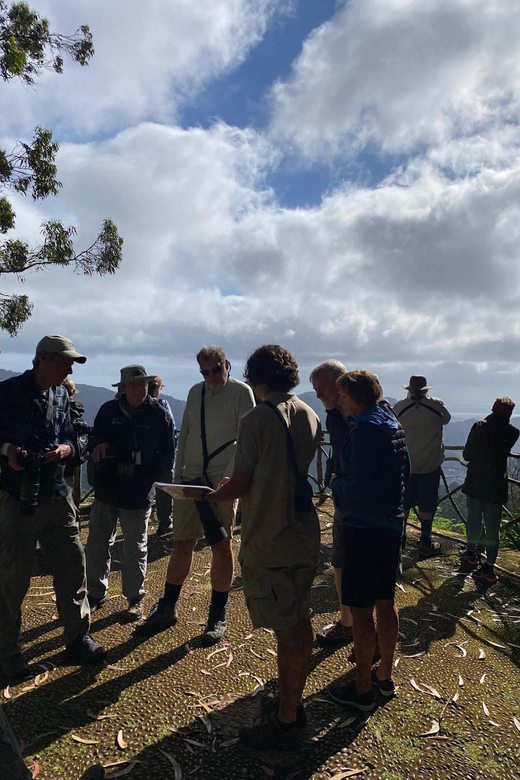
Madeira birdwatching is interesting because you are not just chasing pretty birds, you are tracking a set of endemic species across key Important Bird Areas on one small island. I like that the tour focuses on specific targets like the Madeiran Firecrest, the elusive Laurel pigeon, and the recently acknowledged Madeiran Chaffinch.
My other favorite part is the rhythm of the outing. You get a mix of short walking or sit-and-watch stops, with time to actually look, not just drive past spots. One drawback to keep in mind, though, is that birding is weather and timing sensitive, so you may sometimes get fewer sightings than you hoped.
Key highlights at a glance
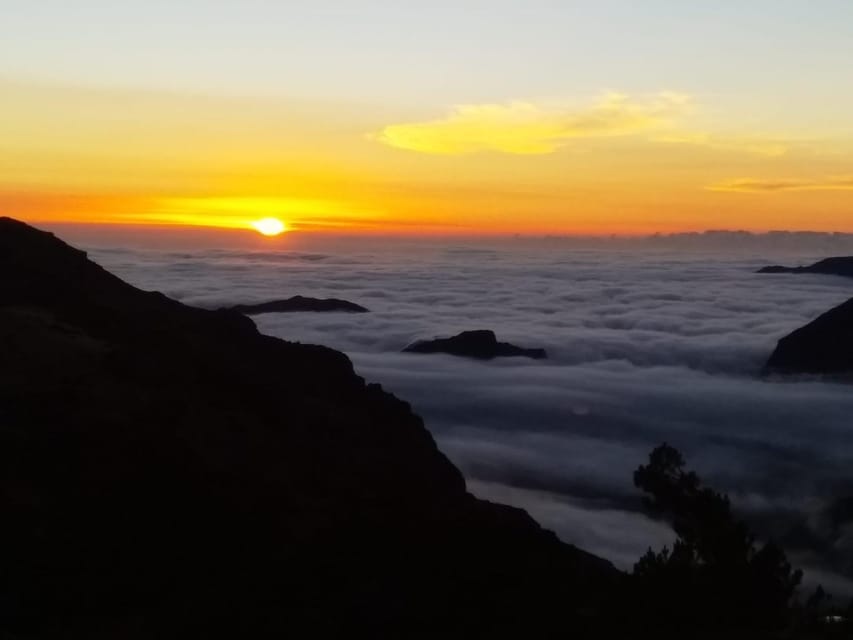
- Endemic focus on Madeira’s standout birds, including Madeiran Firecrest, Laurel pigeon, and Madeiran Chaffinch
- IBA visiting at sites like São Lourenço peninsula and the laurel forest
- Small group size limited to 8, which helps keep spotting calm and organized
- Observation gear included, so you can start looking right away
- Pickup and drop-off in Funchal and Caniço for a low-stress start
Madeira endemics, in a half-day format that makes sense
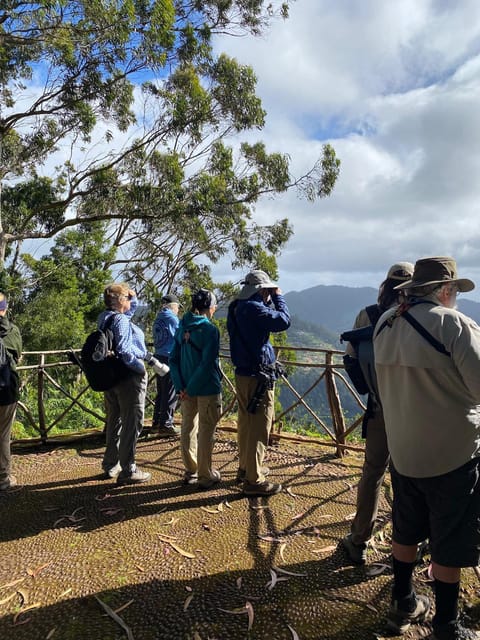
This tour works well if you want an easy, structured birdwatching outing without turning your whole trip into a science project. In about 4.5 hours, you rotate through multiple land areas and Important Bird Areas, then spend time in the places that give birds the best chance to show up.
The standout value is the tour’s target list. Madeira has birds you cannot see anywhere else, and the guide plans the day around those endemics. You are not wandering randomly hoping for luck. You are building a route that gives you several different “windows” into bird activity, from more open lookouts to quieter forest-type settings.
The small group size matters more than you might think. With a limit of 8 participants, the guide can keep track of where everyone is looking and correct your spotting angle quickly. It also keeps the group from scattering, which is important when you are trying to spot small birds at a distance.
Other Madeira days worth keeping in a tab:
- From Funchal: Ecological Catamaran Dolphin Whale Watching
★ 4.5 · 5,771 reviews - Madeira: Skywalk, Porto Moniz, Seixal, and Fanal 4WD Tour
★ 4.9 · 5,732 reviews - Funchal: Dolphin and Whale Watching Catamaran Cruise
★ 4.5 · 5,697 reviews
Getting the most out of a small group with a live guide
You will have a live guide in English or Portuguese, and that guide is the difference between just seeing shapes and actually learning what you are looking at. In the better moments of this kind of outing, you can tell the guide is actively scanning as much as you are, then helping you connect the bird to the right environment.
The reviews back up the idea that the guide experience is strong, especially when it comes to explaining what to watch for. In one case, Alex was praised for being fantastic even when conditions were not ideal, and in another, Alexandre was singled out for knowing birds and plants and sharing lots of field context while driving.
One practical tip I would use in this setting: ask for direction before you move. If the guide says to pause, pause. If the guide points out a likely perch or flight path, take that moment to set your feet and get your binocular grip stable. Birdwatching is often won by doing the simple things at the right time.
Price and value: is $64 fair for 4.5 hours?
At $64 per person for a 4.5-hour tour, the price is in the mid-range for a guided nature experience with pickup and drop-off included in Funchal and Caniço. The question is what you get for that money, and the answer is the whole package: guided IBA visits, observation material provided, plus the logistics support so you do not have to puzzle out how to reach the best spots.
I think the best value here comes from two things you do not always get together:
- Targeted endemic bird focus (not generic wildlife searching)
- Multiple stops where you can look from different angles
If you are the type who enjoys learning while you walk, the value improves fast. The guide shares what you are looking for, and the route gives you several chances to pick up different species. If you are only interested in ticking off birds quickly with no time spent observing and adjusting your aim, you might feel impatient. Still, this tour is built for careful watching, not sprint sightseeing.
São Lourenço peninsula IBA: a strong setting for scanning
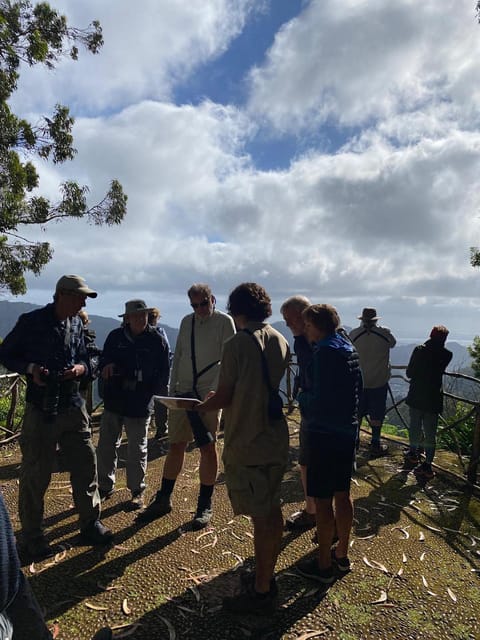
One of the key stops includes the São Lourenço peninsula, listed as an Important Bird Area. This part of the tour is where I would expect your scanning skills to get used right away. Birdwatching on a peninsula often means watching from vantage points and edges, because open areas give you more opportunities to spot movement across the terrain.
You should plan for a mix of looking and moving. The tour is described as visiting several land sites, with time to walk through or sit to watch. That means you are not stuck in one spot for the full half-day, but you also are not constantly on the move. The goal is balance: enough walking to reposition, enough rest to keep your eyes on birds instead of your feet on the path.
What to watch for here is not just a single species moment. Think in terms of rhythm. Get your eyes trained on the distances first, then watch for small changes, wing flashes, or quick drops into cover. The guide’s job is to help you narrow down what matters in real time, so lean into their directions instead of trying to figure everything out yourself.
A small caution: if the weather is poor, visibility can drop fast, and birds can stay quieter. That does not mean the tour is a waste, but it does mean your expectations should be flexible.
Same island, a completely different day out:
- Funchal: Enchanted Terraces, Porto do Moniz & Fanal 4WD Tour
★ 4.8 · 4,930 reviews - From Funchal: Best of Madeira’s West Tour
★ 4.7 · 3,463 reviews - Madeira: Best of the East Tour from Funchal
★ 4.7 · 3,364 reviews - Funchal: Old Town Walking Tour
★ 4.7 · 3,233 reviews
Laurel forest stops: patience for the Laurel pigeon
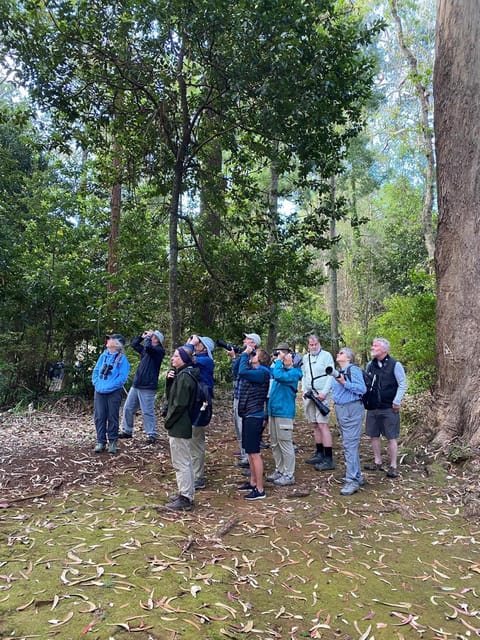
Another highlighted IBA is the laurel forest area. This setting changes the feel of the outing. Instead of wide scans, you are typically looking at denser cover and more hidden perches, which usually asks for patience and steady observing.
This is where the Laurel pigeon comes into the picture. The tour specifically aims for the elusive Laurel pigeon, so this forest-type stop is likely the moment where the guide slows down the group and focuses on careful checking of likely spots.
Here is what to do to maximize your odds. Keep your clothing and movement low-key. If you are constantly shifting, you lose time resetting your view. Also, let the guide do the bird “triage.” If they indicate a promising section, stay with it. In forest settings, the difference between seeing and missing is often a matter of seconds.
The trade-off is that quiet forest can mean quieter birds. When conditions are tough, you might not get the full target experience. That is not a failure of the tour. It is the nature of birdwatching in a habitat where birds do not always show themselves on schedule.
Madeiran Firecrest, Chaffinch, and more: how endemics shape the walk
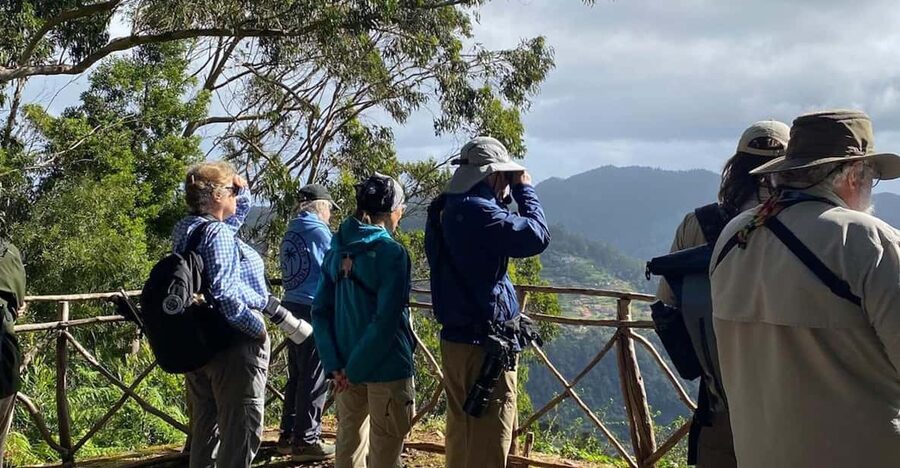
The day is built around meeting endemics, and the named targets include:
- Madeiran Firecrest
- Laurel pigeon
- Madeiran Chaffinch
Firecrest watching is often the kind of experience that feels like you are learning the island’s bird language as you go. In one strongly positive experience, the guide led a nice walk along a levada, with lots of flowers, and it was especially productive for firecrests. That matters because it tells you the tour is not only about a single dramatic lookout. It can include calmer paths where you scan steadily and build confidence.
You may also encounter other notable species along the way, such as a Maderian bluefinch or a Trocaz pigeon, which were both mentioned in a standout outing. The key point for your planning is simple: if your goal is to see multiple endemic species, the tour structure gives you more than one chance to do it, since it uses several land locations.
Also pay attention to the “recently acknowledged” note about Madeiran Chaffinch. This kind of endemics tour is perfect for travelers who like the story behind bird names, not just the sighting itself. The guide’s explanations help you understand why the target matters, and that turns a brief sighting into something you remember.
Observation material included: use it like a tool, not a souvenir
Good bird tours give you the means to see clearly, and this one includes observation material for everyone. That is a practical win, especially if you are traveling light and do not want to pack binoculars.
To get the most from included gear:
- Take a minute to get your focus right when the guide calls for a scan
- Keep your elbows relaxed so your view stays steady
- Re-check your grip before you start chasing fast movement
The guide’s role here is to connect what you see with what it likely is. With endemics, small details matter, and those are exactly the details that are easier when you can see sharply. When conditions line up, that included observation material turns a good walk into a “yes, I actually saw it” moment.
One more thing: the tour is designed with seats or watch points in mind. If you have a chance to sit, sit. A stable stance makes it far easier to follow a small bird’s movement without losing the sight line.
The guide experience: Alex/Alexandre and why pacing matters
Across the better experiences, the guide is described as a high-impact part of the tour. Alex was praised for being fantastic when the weather was not perfect, and Alexandre was praised for knowing a lot about birds and flora, while also sharing plenty of nature knowledge during the drive.
You should expect a guide who:
- adjusts pace when birds are active
- explains what you should be noticing, not just naming species
- helps you interpret the local environment, since bird behavior is tied to habitat
The pacing matters because birdwatching is not continuous excitement. It is many quiet minutes followed by short bursts of action. When the guide manages that rhythm well, you stay alert without feeling rushed or bored.
It also helps that you are in a small group. With fewer people, it is easier to keep attention on the same spot. That is how you avoid the classic problem of everyone looking in different directions at the moment a bird appears.
What to bring for Madeira birdwatching comfort
Plan for a lot of time with your eyes up and your body at rest between watch points. Bring:
- Comfortable shoes (closed-toe is required)
- Water
- Comfortable clothes
- Clothes that can get dirty
This is not a sit-in-a-café tour. Some parts involve walking through land sites, and birdwatching often happens in areas where the ground and vegetation can be messy. If you dress too nicely, you will spend your energy worrying about your clothes instead of watching birds.
Also note the simple but important rules: alcohol and drugs are not allowed. Keep that in mind if you are planning your day around drinks, because this tour is designed to keep attention on the field, not the party.
Weather, bird activity, and why fewer sightings still can be worth it
Birdwatching has one built-in surprise factor: you are sharing the day with wild animals, and they do not always cooperate. One review highlights that the weather was not the best, yet the guide made the outing excellent. That is the best kind of reminder you can take with you: when conditions are imperfect, a strong guide makes a real difference by adjusting how you look and where you focus.
At the same time, there is a cautionary note. One experience felt like too few birds were seen, with explanations described as limited and the tour seen as repetitive. I would treat that as a signal to set your expectations realistically. This is a birding tour, not a guaranteed endemics show.
My practical approach is to go in wanting to learn and to observe, not just to demand a checklist outcome. If you get only part of the target set, you can still have a valuable half-day if you enjoy habitat scanning, patient watching, and clear guidance on what matters in Madeira.
Pickup and timing: keep your start simple in Funchal and Caniço
Logistically, the tour is set up to be easy if you are already near Funchal or Caniço. Pickup and drop-off are available in these areas, and the tour begins with a pickup location in Funchal.
If you are staying outside Funchal and Caniço, you need to contact the provider for possible alternative pickup or drop-off arrangements. That is worth handling early, because good day-of routing depends on confirming how you will get to the first watch area.
The tour is English and Portuguese, and it runs for 4.5 hours. You also get the structure of a small group, limited to 8 participants, which helps keep timing predictable and reduces chaos.
Who should book Madeira: Birdwatching – The Endemics?
This tour is a strong fit if you:
- want to focus on Madeira endemics rather than general wildlife
- enjoy guided interpretation while you walk and watch
- like small-group tours where you can hear the guide and adjust quickly
- want included observation material instead of bringing your own gear
It is not listed as suitable for children under 5, so plan accordingly for families with very young kids. If you have mobility limitations, you should consider whether the walking and sit-and-watch style fits your energy level, since the tour involves land sites and some movement.
If you only want nonstop attractions and quick photos, this might feel slow. But if you like thoughtful nature time, this is exactly the kind of half-day that can add depth to Madeira.
Should you book this birdwatching tour?
Book it if your priority is seeing Madeira’s endemic birds with a guide who helps you look properly, and you are okay with the natural uncertainty of birding. The price feels reasonable when you factor in pickup in Funchal and Caniço, included observation material, and multiple Important Bird Area stops aimed at specific species like Madeiran Firecrest and the Laurel pigeon.
Skip or reconsider if you need a guaranteed number of sightings, or if you dislike tours that rely on patience and quiet. Also, if you are traveling far from Funchal and Caniço, plan extra time to confirm pickup options.
My decision checklist is simple: you like small groups, you want a focused endemic route, and you can handle a weather-dependent day. If yes, this is a solid, practical choice.
FAQ
How long is the Madeira birdwatching tour?
The tour lasts 4.5 hours.
What is the price per person?
The price is $64 per person.
How big is the group?
It is a small group limited to 8 participants.
What areas are pickup and drop-off available in?
Pickup and drop-off are available within the Funchal and Caniço areas.
What if I’m staying outside Funchal and Caniço?
Transfers outside Funchal and Caniço require further contacting to arrange possible alternative pickup or drop-off locations.
What languages does the live guide speak?
The live tour guide speaks English and Portuguese.
What observation equipment is included?
Observation material is included for everyone.
What should I bring for the tour?
Bring comfortable shoes, water, comfortable clothes, clothes that can get dirty, and closed-toe shoes.
Are there any rules about food or drink?
Alcohol and drugs are not allowed.
Is the tour suitable for young children?
It is not suitable for children under 5 years.
Just added around Madeira
- East Tour – 4×4 – Small Group★ 5.0 · 20 reviews
- A great tuk-tuk adventure Tour at Cabo Girão – Skywalk★ 5.0 · 8 reviews
- Full Day Tour in 4×4 Jeep to Porto Moniz and Fanal★ 5.0 · 6 reviews
- Jeep Adventure to Volcanic Pools & UNESCO Forest Treasures★ 5.0 · 19 reviews
- A Self-Guided Walk Through Funchal’s Historic Heart With a Local★ 5.0 · 7 reviews
- 3 Hour Private Trike Tours of Madeira Island★ 5.0 · 60 reviews
- Toboggan Ride & Madeira Wine Tasting Tour★ 2.8 · 4 reviews
- Surf lesson in Madeira★ 4.8 · 55 reviews